Designed to support energy, signal, and system interaction across ICE, Hybrid, and EV platforms Integrating German Engineering Precision and Japanese Technological Refinement
Precision-engineered system intelligence for modern vehicles
Three Key Factors enabled by the Synapse Series
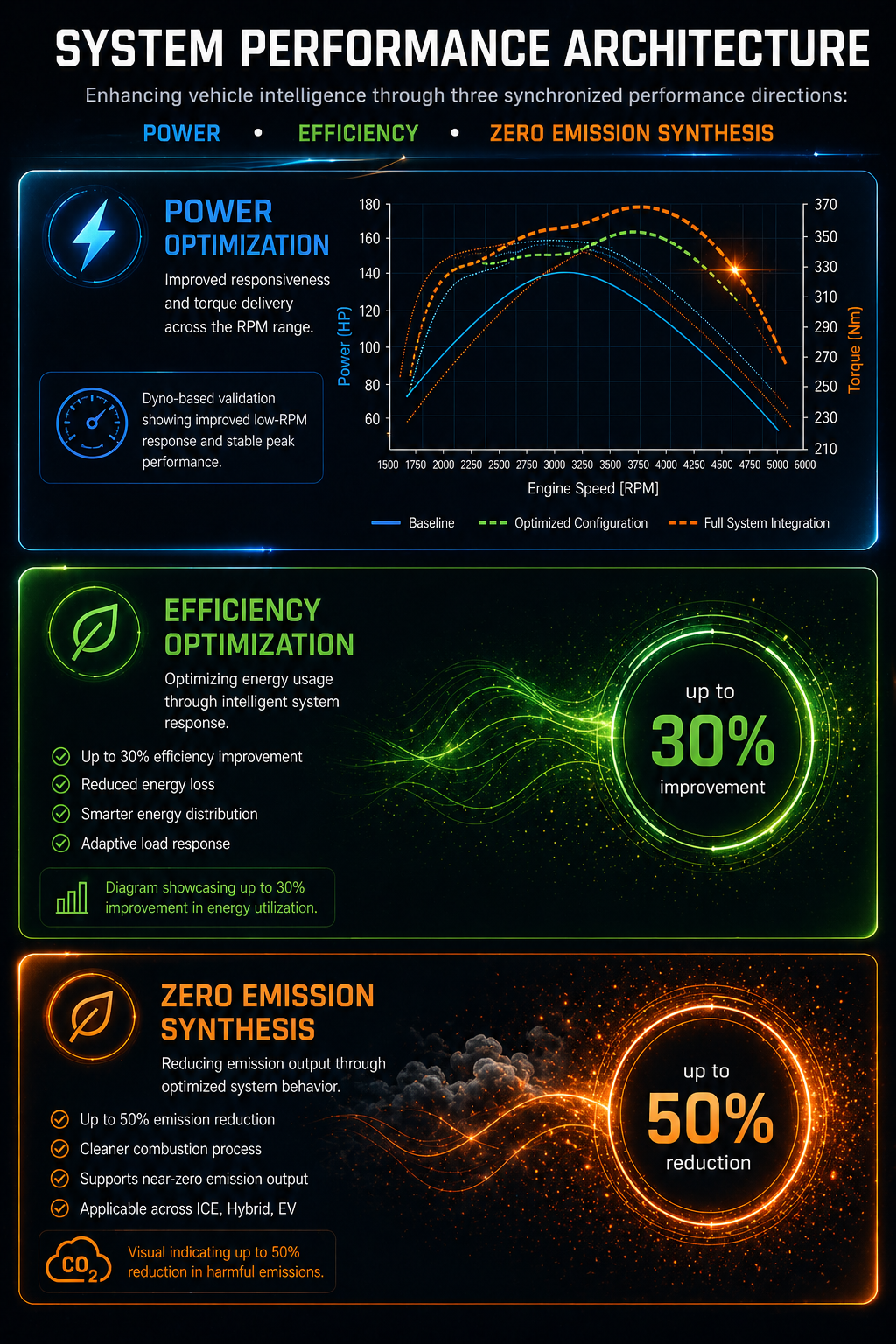
The Synapse Series enables system-level optimization across three primary directions
Enhancing vehicle intelligence through Three Key Factors:
Power • Efficiency • Zero Emission Synthesis
Improved responsiveness and torque delivery across the RPM range.
Optimizing energy usage through intelligent system response.
Reducing emission output through optimized system behavior.

M-ZONIC builds Neural Interface Modules that integrate directly with vehicle systems.
Not a bolt-on upgrade — but a full intelligence layer for ICE, Hybrid, and Electric.
Through adaptive system interaction, M-ZONIC optimizes vehicle behavior.
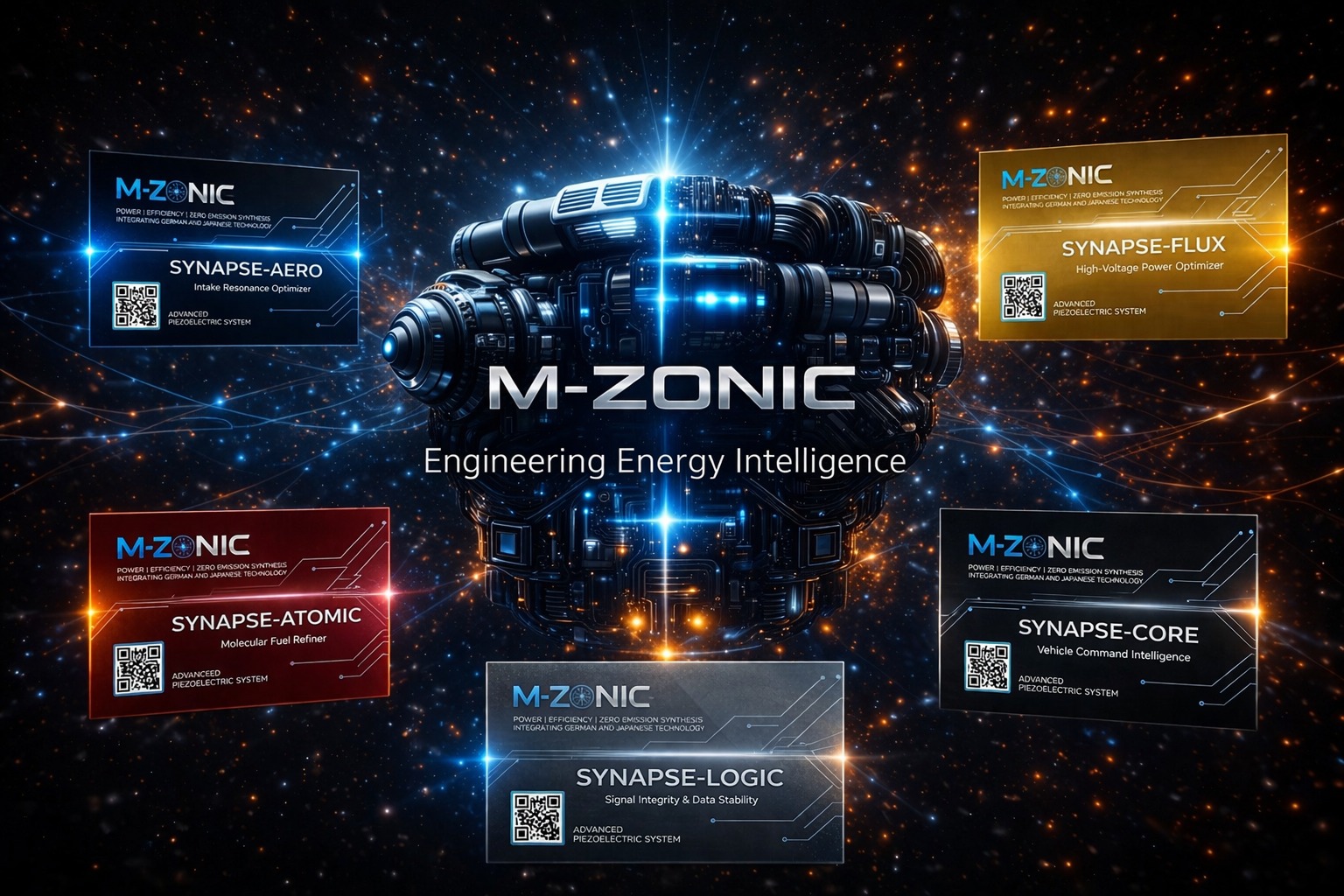
Each Synapse module is precision-engineered for a specific performance domain.

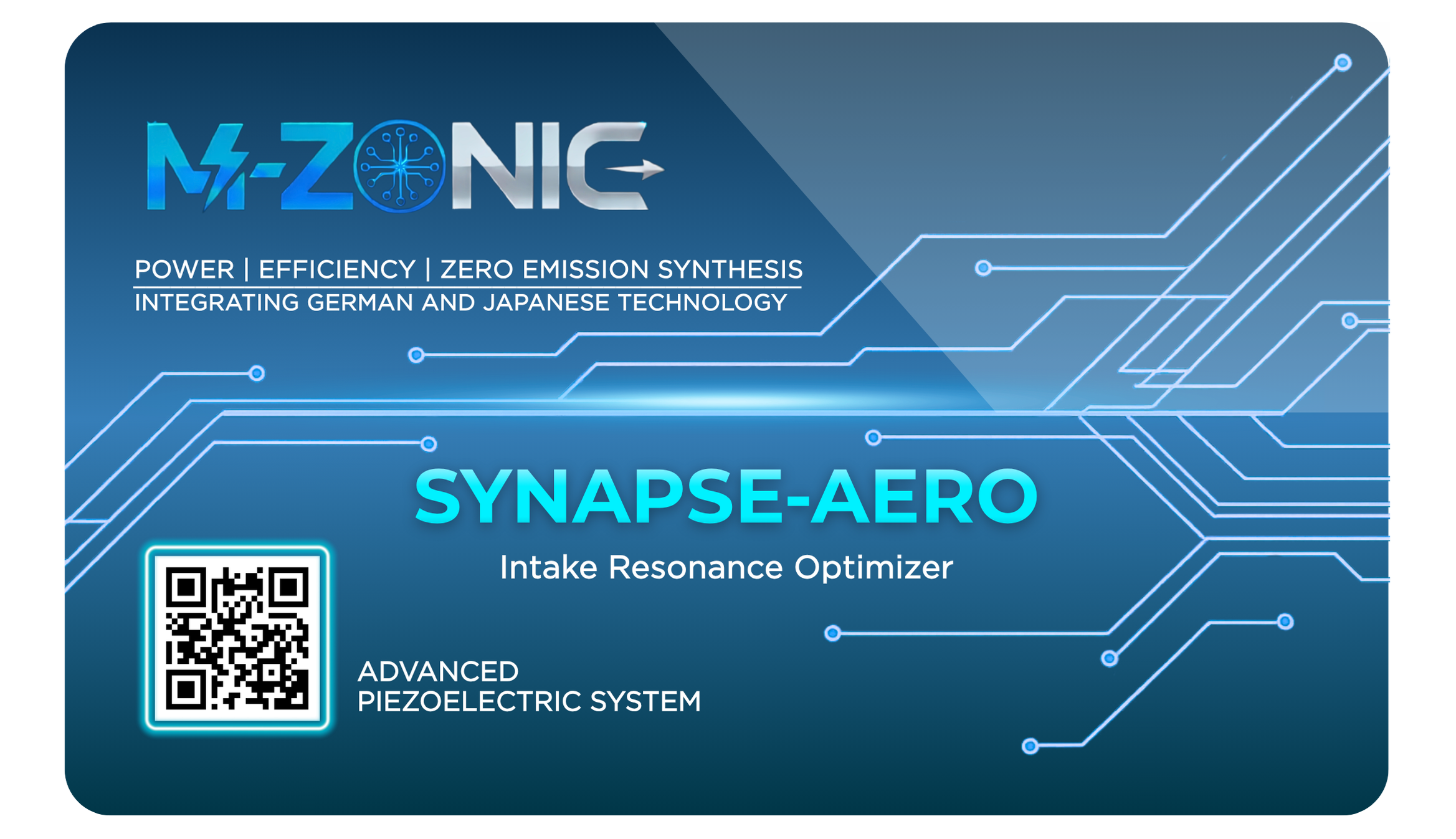
Synapse-Aero is engineered to support airflow resonance stabilization within intake system architecture, helping optimize dynamic air behavior under variable engine load conditions.
Core Focus:
• Airflow resonance harmonization
• Dynamic intake modulation
• Stability under RPM fluctuation
• Signal-based airflow conditioning
Application:
• Gasoline engines
• Diesel engines
• Turbocharged systems
• Hybrid ICE platforms

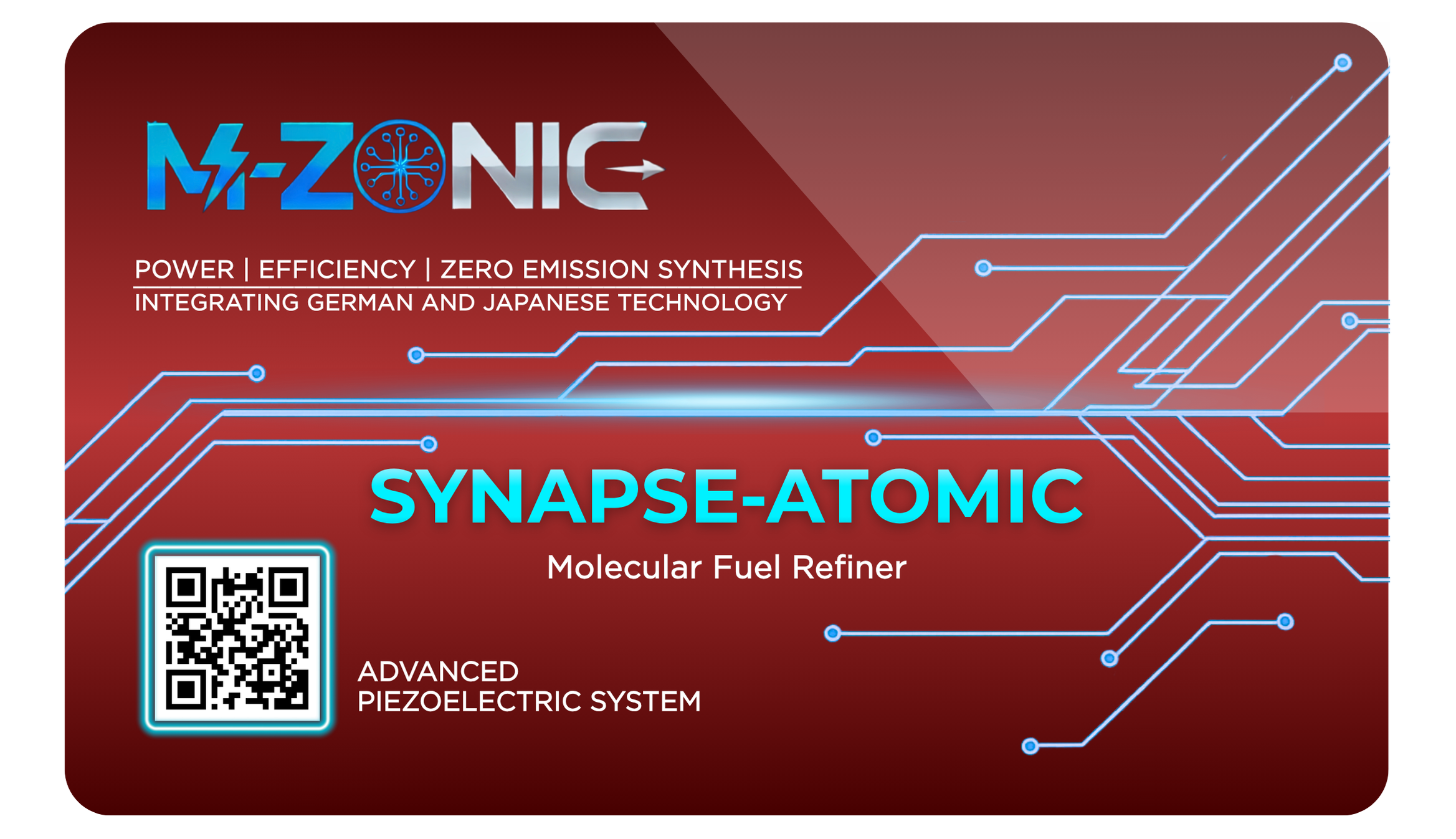
Synapse-Atomic is designed to support fuel response conditioning through advanced micro-signal interaction, enhancing combustion stability and response consistency.
Core Focus:
• Fuel signal harmonization
• Combustion input stabilization
• Adaptive micro-energy conditioning
• Emission optimization support
Application:
• Gasoline engines
• Diesel engines
• Performance combustion systems

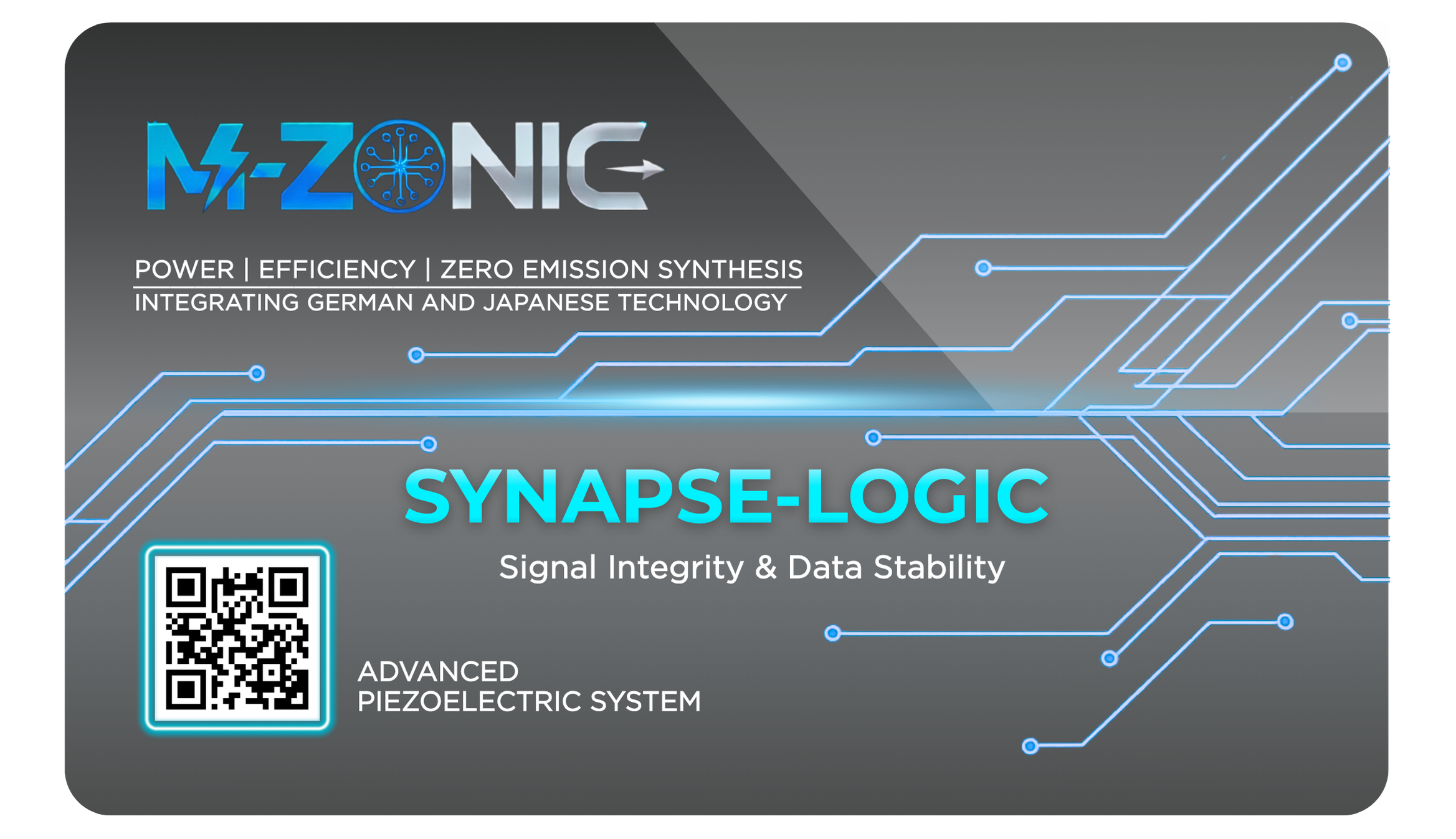
Synapse-Logic enhances signal clarity and electrical stability across vehicle electronic systems to support optimized performance and system consistency.
Core Focus:
• Electrical signal stabilization
• Noise mitigation
• Voltage harmonization
• Data integrity preservation
Application:
• ECU support systems
• Sensor networks
• Automotive electronic platforms

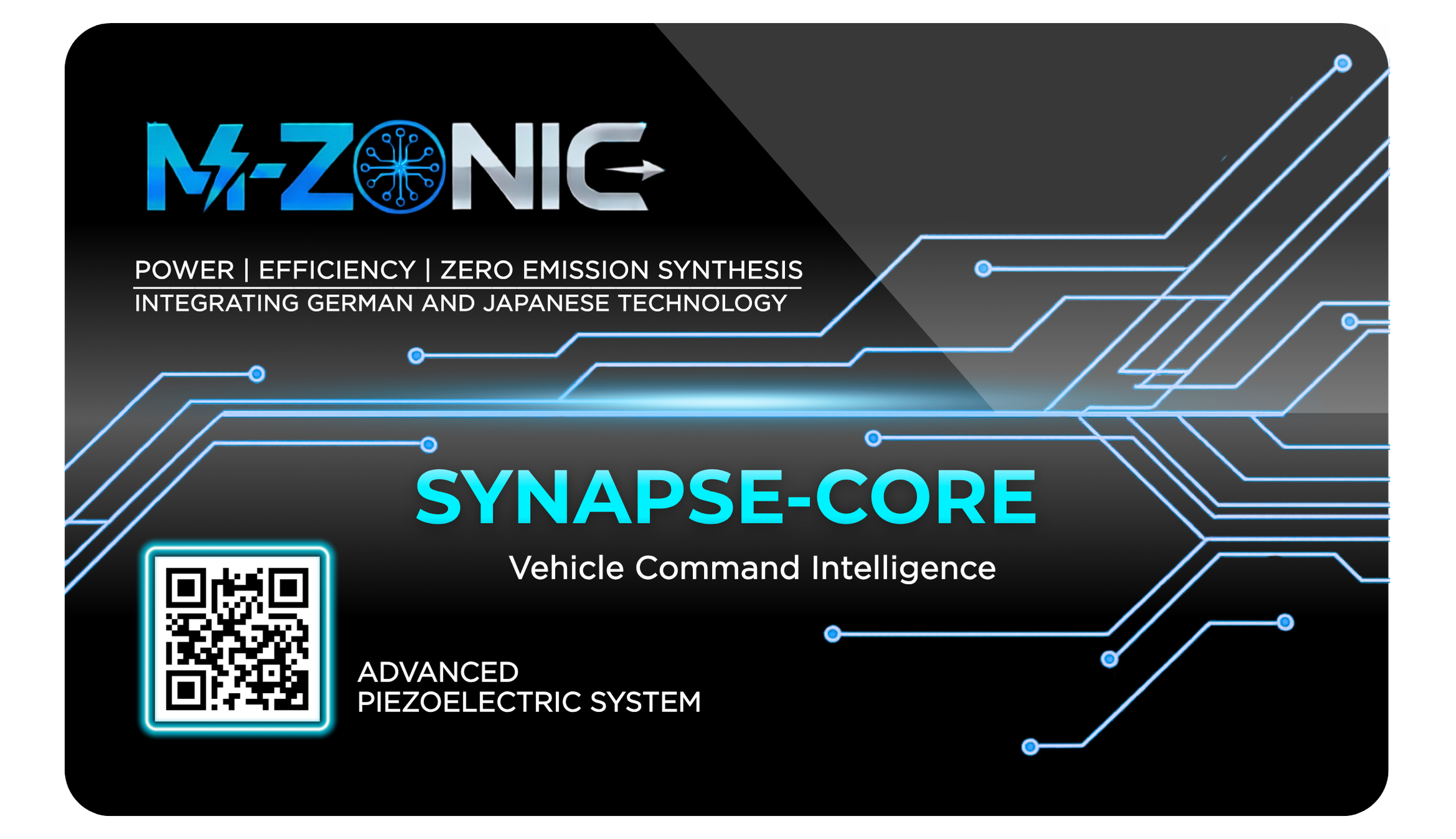
Synapse-Core functions as a neural coordination interface supporting centralized vehicle command logic within EV architectures.
Core Focus:
• Command signal mapping
• Control logic synchronization
• System-wide data coordination
• Intelligent power management support
Application:
• Battery electric vehicles (BEV)
• Hybrid electric vehicles (HEV)
• Advanced EV platforms

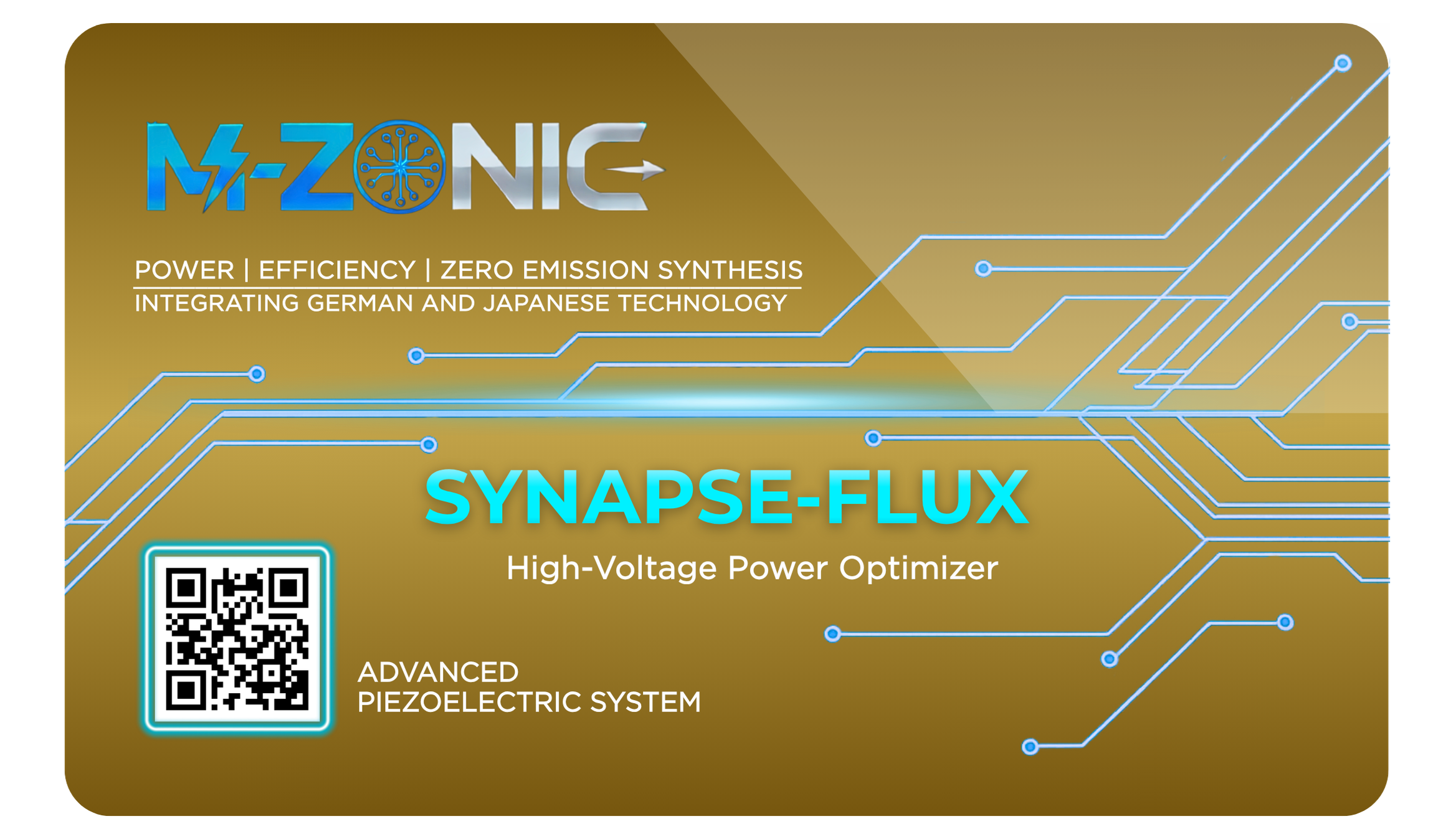
Synapse-Flux is designed to support high-voltage energy flow stability and dynamic load balancing within electric propulsion systems.
Core Focus:
• High-voltage conditioning
• Energy flow synchronization
• Load stability control
• Power modulation support
Application:
• EV high-voltage systems
• Inverter & battery architecture
• EV performance platforms
Five intelligence layers. Continuous optimization. No modification required.
M-ZONIC reads the complete electrical architecture of your vehicle.
Advanced transducers capture mechanical vibration and thermal energy.
Proprietary algorithms eliminate electromagnetic interference.
The neural core monitors and redistributes power in real time.
The module learns. Every kilometer refines the behavioral profile.

EMI eliminated at the source. Interference-free communication.
Dynamic load balancing reallocates power in real time.
The neural engine builds a behavioral model unique to your vehicle.
Petrol, diesel, LPG. Retrofit-ready installation.
Dual-domain intelligence. Seamless energy management.
Full-native EV integration. Battery management and charge optimization.
Every M-ZONIC module begins with one question.
The vehicle is a single unified system.
Factory aesthetics intact. Warranty integrity preserved.
Zero Emission Synthesis governs every product decision.
Distributors, workshop partners, fleet operators. One global network.
M-ZONIC is building the most intelligent automotive network.
Improved responsiveness and torque delivery across the RPM range.
Optimizing energy usage through intelligent system response.
Reducing emission output through optimized system behavior.